
Blockchain Infrastructure & Real-Time Data Indexing
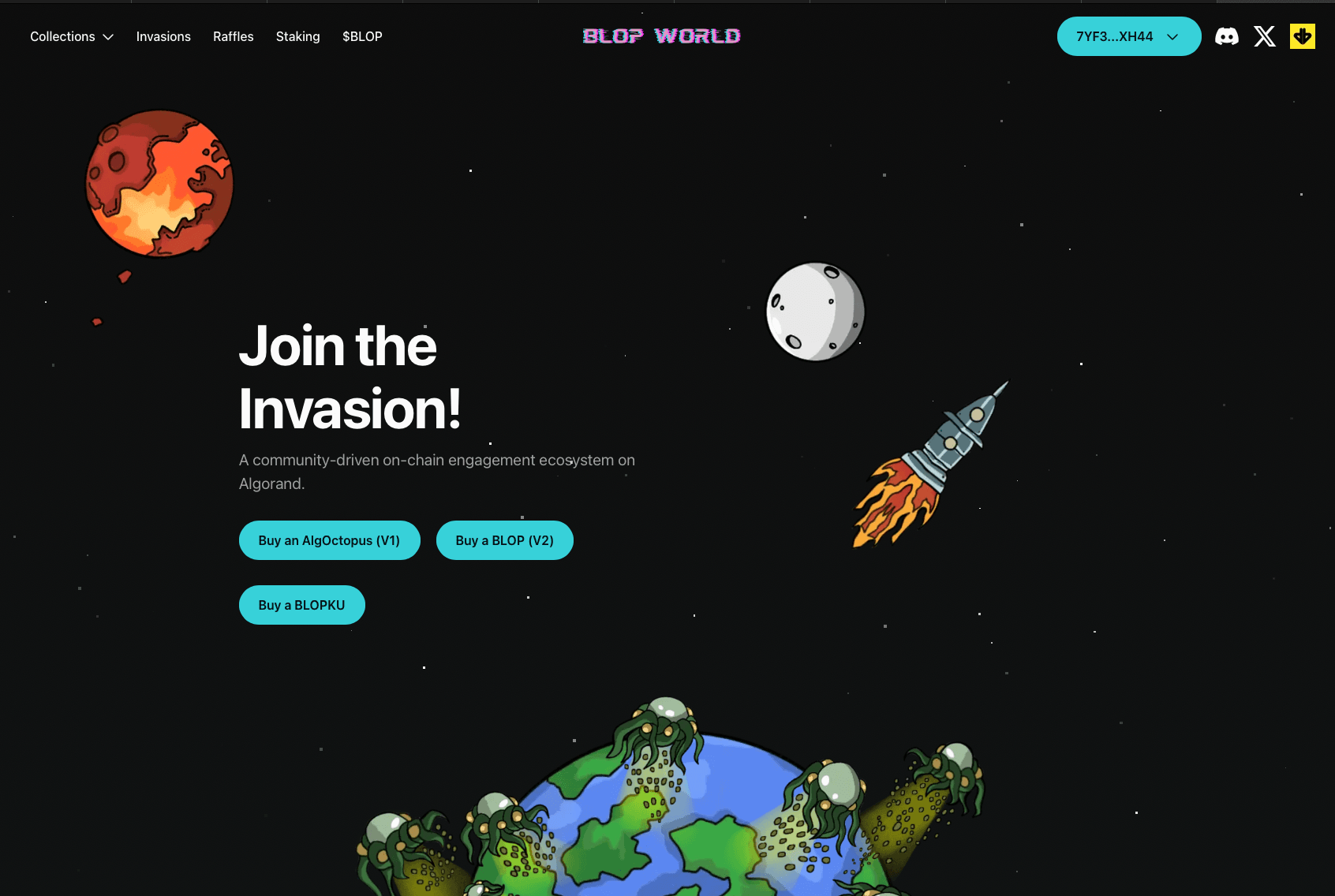
High-availability Web3 platform featuring a custom block follower for seamless synchronization between on-chain events and relational databases.
Real-time
Synchronization
100%
Data Integrity
99.9%
Indexer Uptime
< 4s
Data Latency
High-Resilience
Availability
Hybrid Cloud
Architecture
Context
For the Algorand-based project blop.world, an infrastructure was required that could combine complex game mechanics (quests, soft staking) with the reliability of traditional web applications. The main challenge was the flawless mirroring of blockchain data into a high-performance database to ensure fast UI response times—something that would be impossible to achieve through direct on-chain queries alone.
Approach
At the core of the application lies a hybrid tech stack specifically tuned for scalability and fault tolerance:
- Full-Stack Development: Next.js for the frontend and API logic, combined with a hybrid database structure consisting of PostgreSQL (transaction-safe) and MongoDB (flexible for game states).
- Custom Block Follower: Development of a specialized indexer that analyzes every Algorand block in real-time, filters relevant transactions, and immediately updates the PostgreSQL instance.
- Resilience Strategy: Implementation of an automated fallback mechanism. In the event of network disruptions, the system detects the offset from the current chain head and performs sideloading to synchronize the data before seamlessly returning to real-time mode.
Features
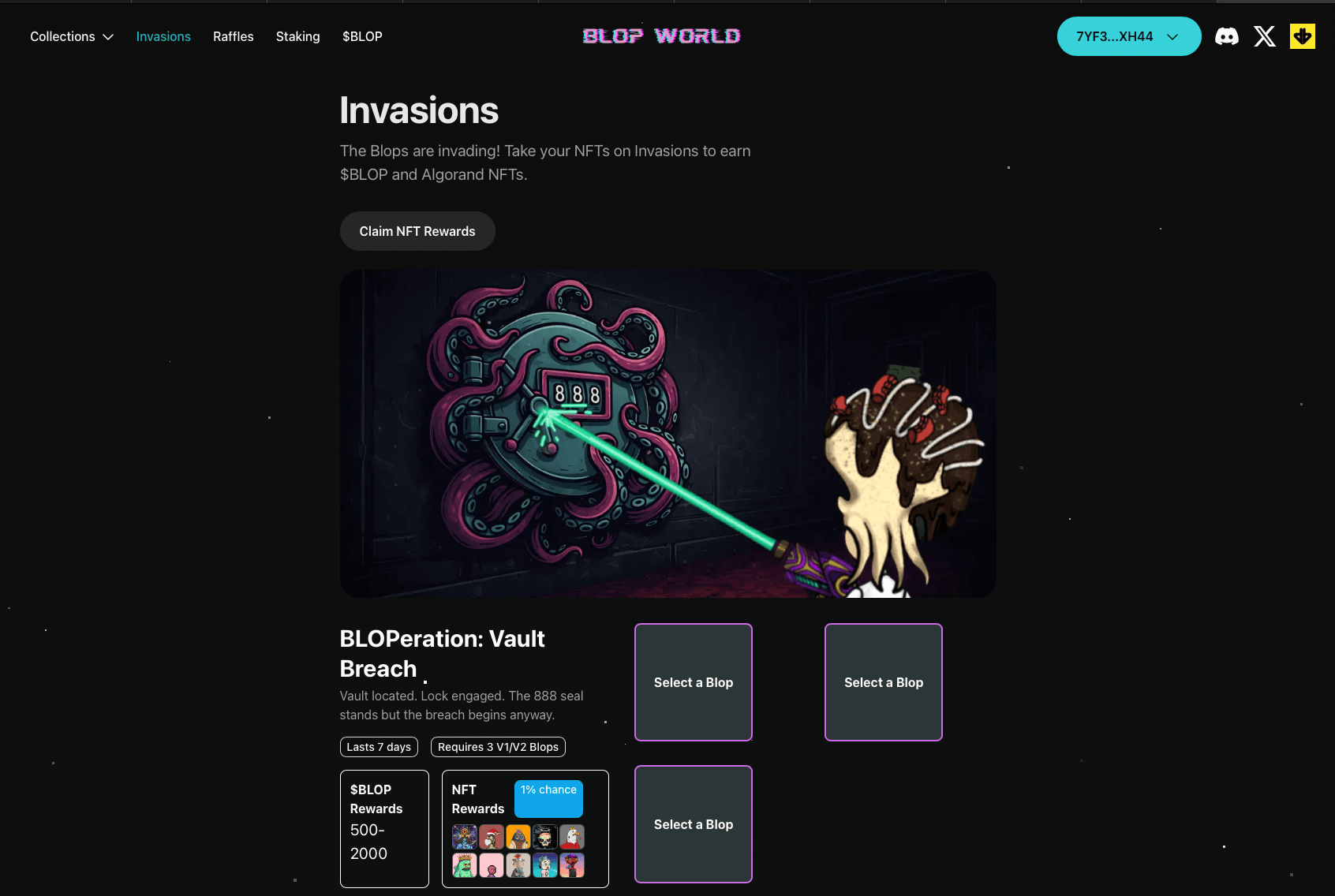
- Invasions & Quests: A decentralized system where NFTs are sent on missions. The logic verifies on-chain ownership and calculates rewards off-chain.
- Asset Transformation: An automated system for "Creature Bags." Through intelligent database linking, users can transform their progress into actual NFTs within the "Blopku" ecosystem (Claiming process).
- Infrastructure: Utilization of Amazon S3 for the high-performance delivery of high-resolution game assets.
Results
- Seamless Synchronization: Thanks to the custom indexer, data consistency between the blockchain and the UI stands at 100%.
- High User Adoption: By caching blockchain data in Postgres, interactions feel like a classic Web2 app despite the decentralized backend processing.
- Scalable Backend: The system handles peak loads during major "Invasion" events without performance degradation, thanks to the efficient separation of on-chain validation and off-chain rendering.
"The combination of Next.js and a dedicated block follower allows us to make blockchain technology invisible to the end user, making it ready for mass adoption."
Request a similar project
Have a similar initiative in mind? Let's talk.